How Court Surfaces and Pitch Conditions Drive Upset Patterns in Multi-Sport Accumulator Strategies
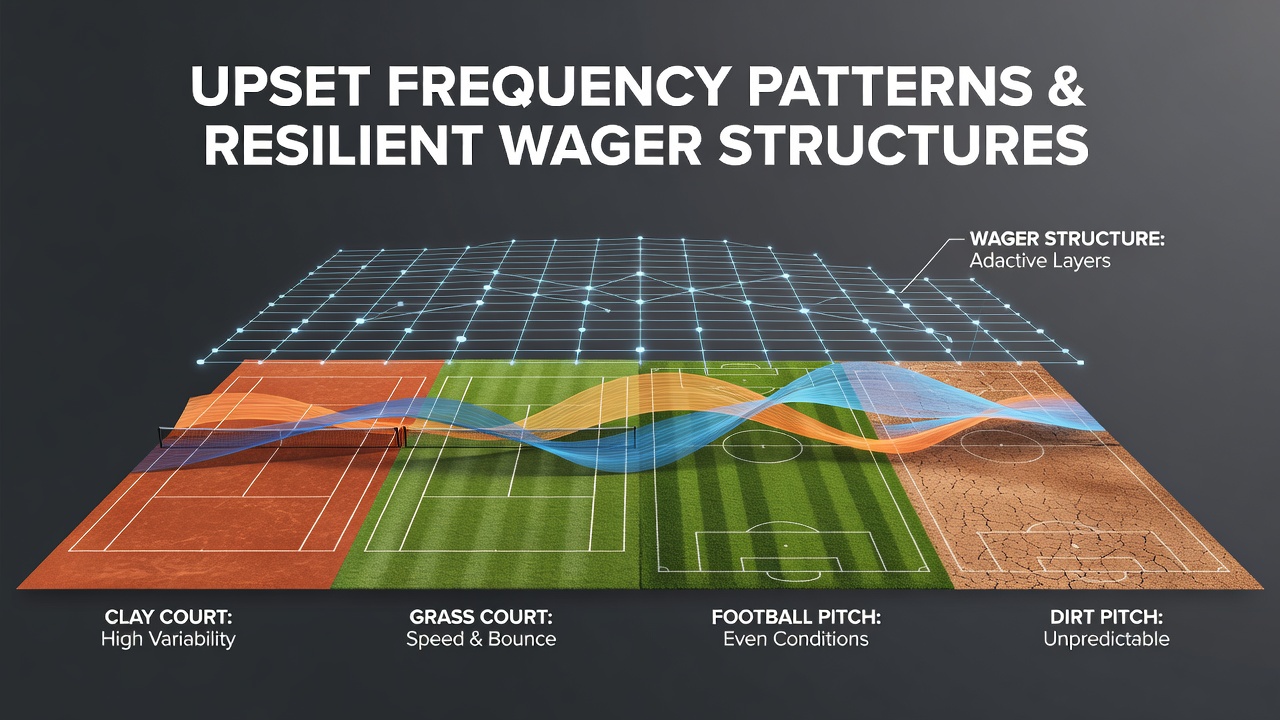
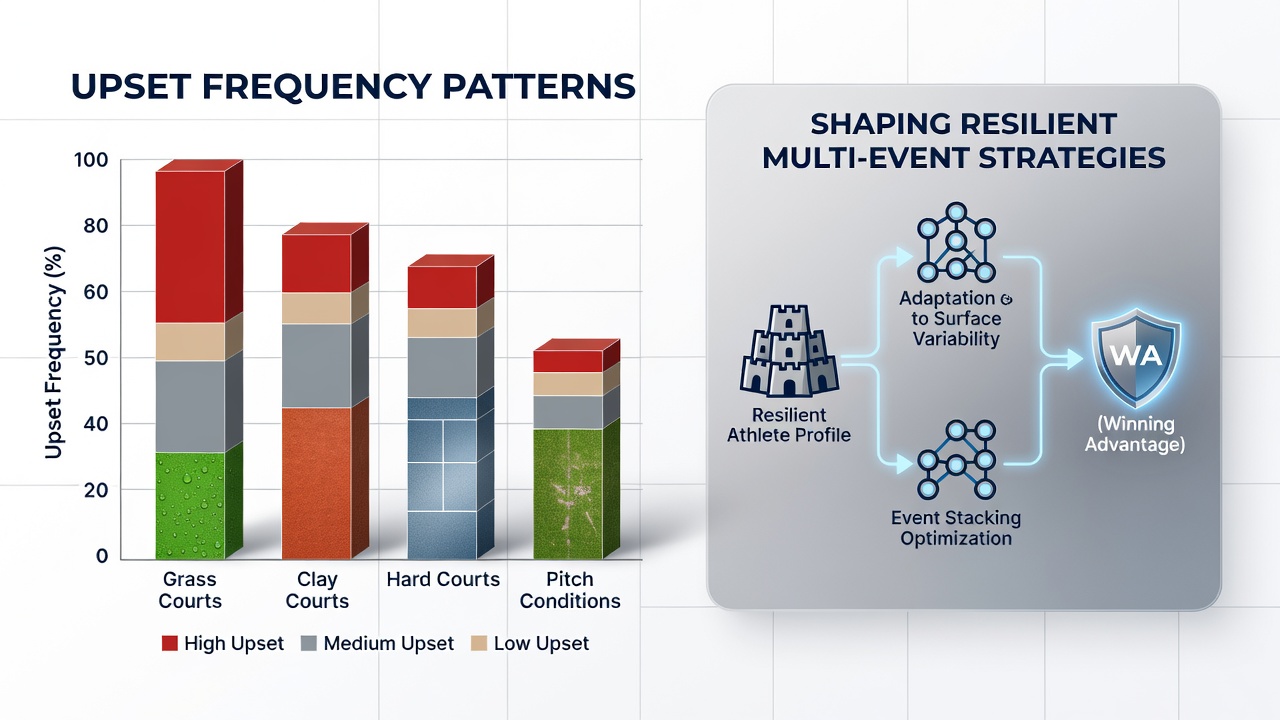
Upset frequency patterns shift noticeably when athletes move between court surfaces in tennis and when pitch conditions change in football or rugby, and those shifts directly influence how multi-event wager structures hold up over time. Data from professional circuits show that grass courts produce higher upset rates for seeded players compared with clay, where baseline consistency often reduces surprises, while hard courts sit somewhere in between depending on speed and bounce. Observers note that these surface-driven variances create measurable edges when bettors construct accumulators that span multiple disciplines and venues.
Tennis Court Surfaces and Recorded Upset Rates
Clay courts slow the ball and reward longer rallies, which tends to compress upset margins because favorites maintain higher win percentages once matches extend past two sets. Grass accelerates serves and produces shorter points, so underdogs with strong serving percentages record more victories against higher-ranked opponents, especially in the opening rounds of tournaments. Hard courts generate intermediate outcomes where surface speed and temperature combine to alter bounce consistency, and analysts tracking ATP and WTA events through 2025 documented upset spikes on faster hard courts during humid conditions. Those patterns become relevant when multi-event bets include matches from different surfaces in the same slip, because a single surface mismatch can alter the overall probability distribution.
Pitch Conditions in Football and Rugby
Football pitches that turn soft after heavy rain increase the likelihood of lower-scoring draws and defensive errors, which raises upset potential for visiting sides that rely on counter-attacks rather than possession dominance. Dry, firm pitches favor teams with technical midfield control, and historical match data indicate that home favorites win more often under those conditions. Rugby union pitches show similar effects when wet weather reduces kicking accuracy and increases handling mistakes, leading to higher variance in match outcomes. Researchers compiling performance metrics across European leagues have observed that pitch moisture levels correlate with changes in expected goal or point margins, information that carries over when bettors pair football or rugby legs with tennis selections in the same accumulator.
August 2026 Scheduling Overlaps and Surface Transitions
August 2026 features overlapping schedules that place tennis hard-court events alongside early football league fixtures and rugby pre-season matches, creating opportunities to examine cross-sport upset correlations. Data sets covering prior seasons reveal that bettors who diversify across surfaces and pitch states achieve more stable multi-event returns because isolated weather or surface shocks do not cascade through the entire structure. Industry reports compiled by the European Gaming and Betting Association track how operators adjust odds when surface transitions coincide with league restarts, and those adjustments reflect updated upset probabilities rather than static rankings.
Constructing Resilient Multi-Event Structures
Resilient accumulator designs incorporate legs from contrasting surfaces and pitch states so that an unexpected result on one variable does not collapse the entire ticket. Bettors often select one tennis match on clay, another on grass, and a football fixture on a known wet pitch, thereby spreading exposure across independent upset drivers. Studies from the Canadian Centre on Substance Use and Addiction have examined how gamblers adjust stake distribution when outcome variance rises due to environmental factors, and the findings indicate that diversified selections reduce drawdown frequency in long-term tracking. Real-time condition monitoring further refines these structures because pitch reports and court maintenance schedules become available days before events, allowing adjustments that align wager components with current surface realities.
Data Integration and Probability Adjustments
Statistical models that embed surface coefficients and pitch moisture indices produce revised probabilities that better match observed results than ranking-based forecasts alone. When these adjusted figures feed into multi-event calculators, the implied odds reflect the higher or lower upset likelihood attached to each leg. Operators and bettors alike consult historical databases that segment matches by surface type and weather category, and the resulting matrices show clear clustering of upset events under specific conditions. Those matrices support wager structures that remain viable across varying calendars because each component has been stress-tested against documented environmental influences rather than assumed uniformity.
Conclusion
Surface and pitch variables generate distinct upset signatures that accumulate across tennis courts and football fields, and those signatures shape the architecture of multi-event wagers by dictating how much diversification reduces overall variance. August 2026 schedules highlight these interactions once more as events cross multiple surfaces and weather patterns, giving participants concrete data points for refining selections. Organizations tracking betting trends continue to record how condition-aware structures perform relative to unadjusted accumulators, confirming that environmental segmentation remains a measurable factor in outcome stability.