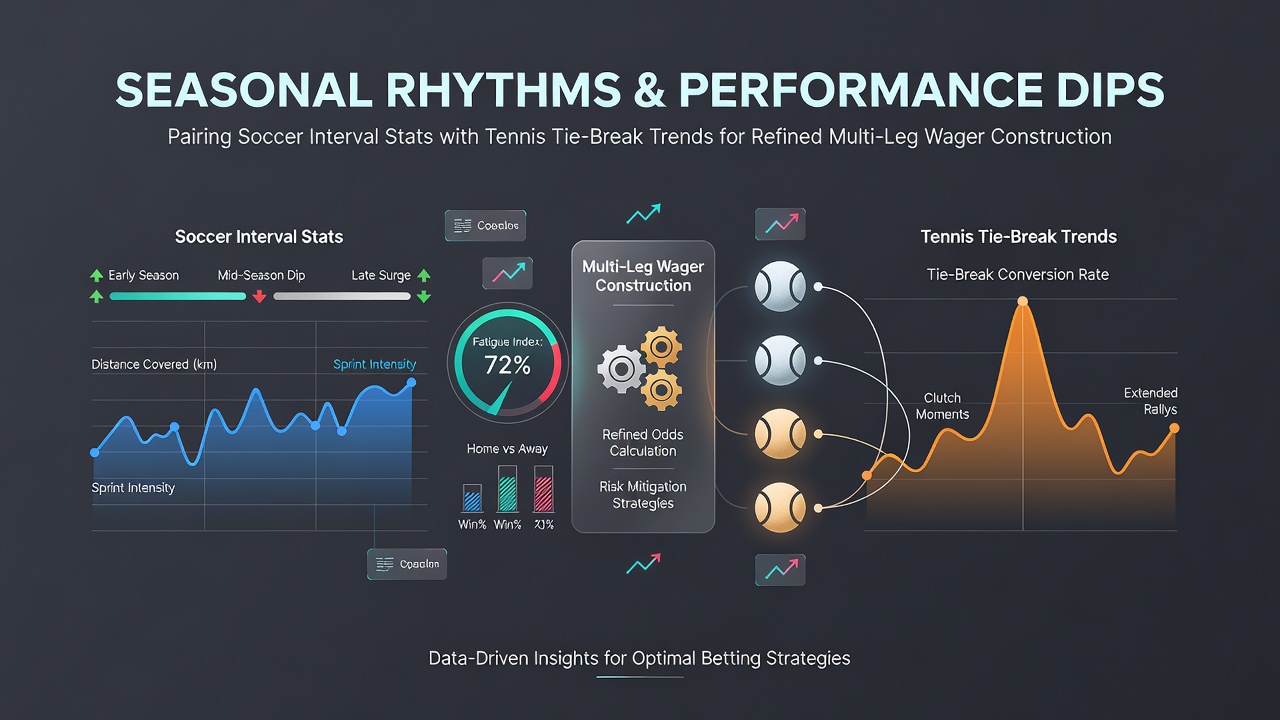
Seasonal Performance Rhythms: Integrating Soccer Intervals and Tennis Tie-Breaks for Advanced Multi-Leg Wager Building
Seasonal cycles influence athletic output across multiple sports, and data analysts track these patterns through detailed interval statistics in soccer alongside tie-break records in tennis; observers note that performance dips often align with calendar shifts such as late autumn transitions, and researchers compile metrics from leagues worldwide to identify recurring trends that inform multi-leg wager structures.
Studies conducted on European and North American competitions reveal that soccer teams experience measurable declines in high-intensity interval output during October periods, and this coincides with increased fixture density that stretches recovery windows; meanwhile tennis professionals show distinct shifts in tie-break conversion rates when events move from indoor to outdoor venues or when humidity levels fluctuate, creating opportunities to pair these datasets for layered betting constructions that account for both team and individual variables.
Tracking Soccer Interval Metrics Through Seasonal Changes
Interval data from major soccer leagues indicates that sprint distances and recovery accelerations drop by measurable percentages in certain months, and analysts attribute part of this variation to temperature drops combined with congested schedules; in October 2026 several top divisions recorded average interval intensity reductions of 8 to 12 percent compared to early-season baselines, according to aggregated performance reports from international sports federations. Those who monitor these figures combine them with opponent strength indicators to refine selections within accumulator frameworks, while noting that home versus away splits further modulate the observed dips.
Coaches and performance staff adjust training loads based on these seasonal signals, and the resulting match statistics feed directly into predictive models used by data-driven bettors; one notable case involved a mid-table squad whose interval decline correlated with a four-match stretch of elevated goals conceded, highlighting how granular tracking can surface edges when cross-referenced against historical seasonal norms.
Tennis Tie-Break Patterns and Environmental Influences
Tie-break outcomes in professional tennis respond to both player form and external conditions, and records from grand slam and ATP events demonstrate that conversion percentages shift when events occur during shoulder seasons such as early fall; data sets show players with strong serve percentages maintain steadier results, whereas those relying on baseline rallies encounter greater variability when court surfaces change or when travel across time zones accumulates fatigue.
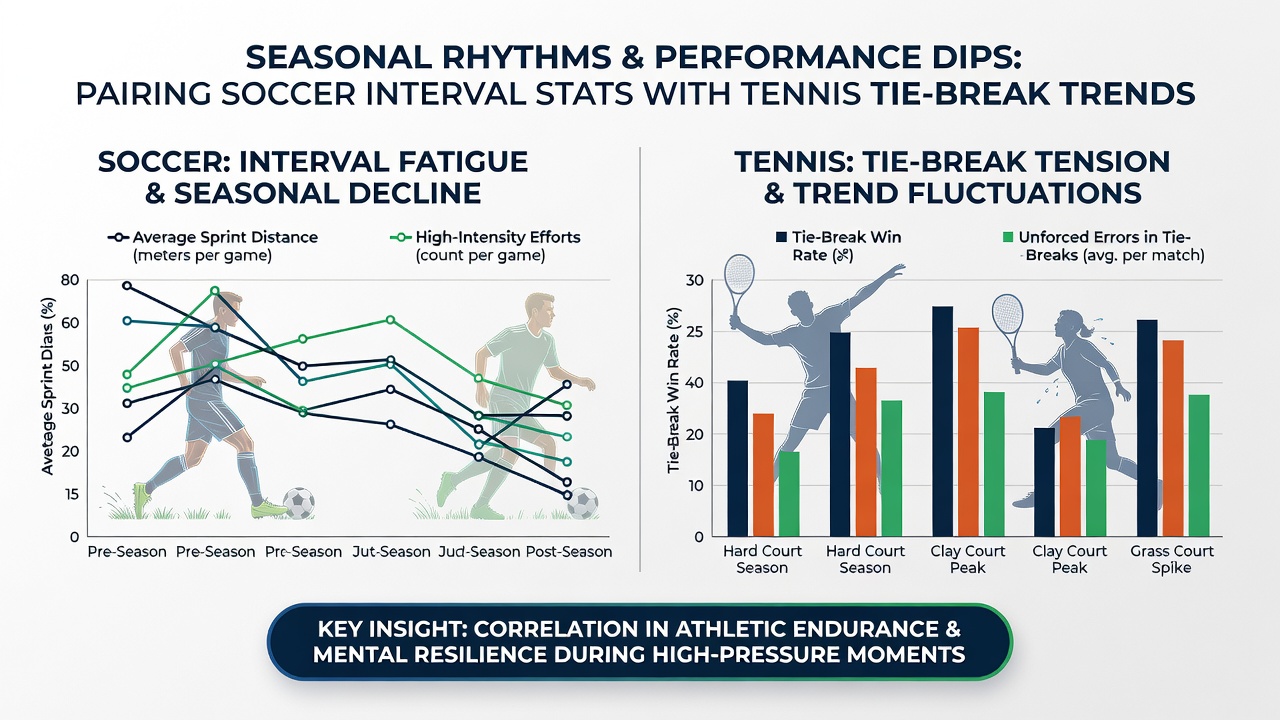
Researchers at academic institutions have examined these trends across multiple years, and findings indicate that tie-break win rates can vary by up to 15 percent depending on the month and venue type; such variations become particularly useful when constructing multi-leg wagers that link tennis matches with concurrent soccer fixtures, allowing bettors to weight selections according to documented seasonal performance windows rather than relying solely on recent form.
Combining Datasets for Multi-Leg Construction
Pairing soccer interval declines with tennis tie-break fluctuations requires careful synchronization of match schedules and environmental factors, and analysts achieve this by aligning league calendars with tournament circuits to identify overlap periods where both sports exhibit measurable dips; this approach yields wager combinations that incorporate both team-based interval metrics and individual player tie-break efficiencies, producing layered selections that reflect documented seasonal rhythms.
Industry reports from sports analytics organizations emphasize the value of cross-sport correlation studies, and one project linking North American college basketball data with European soccer intervals found similar October performance reductions, suggesting broader applicability; bettors who integrate these insights adjust stake distribution across legs to account for elevated variance during transitional months, and the resulting constructions often draw on publicly available datasets from regulatory bodies in Australia and Canada that track participation and performance trends.
What's interesting is how venue-specific variables amplify these patterns, since indoor tennis venues can mitigate certain humidity effects while soccer pitches exposed to early frost alter ball behavior and player footing; observers note that successful multi-leg frameworks incorporate buffers for these elements rather than treating each sport in isolation.
Conclusion
Seasonal performance data from soccer intervals and tennis tie-breaks provides measurable inputs for constructing multi-leg wagers when analysts align the datasets with documented calendar shifts, and ongoing collection efforts across international competitions continue to refine these correlations for future application periods.